Project References
DELIVERED PROJECT · PROJECT VISUAL
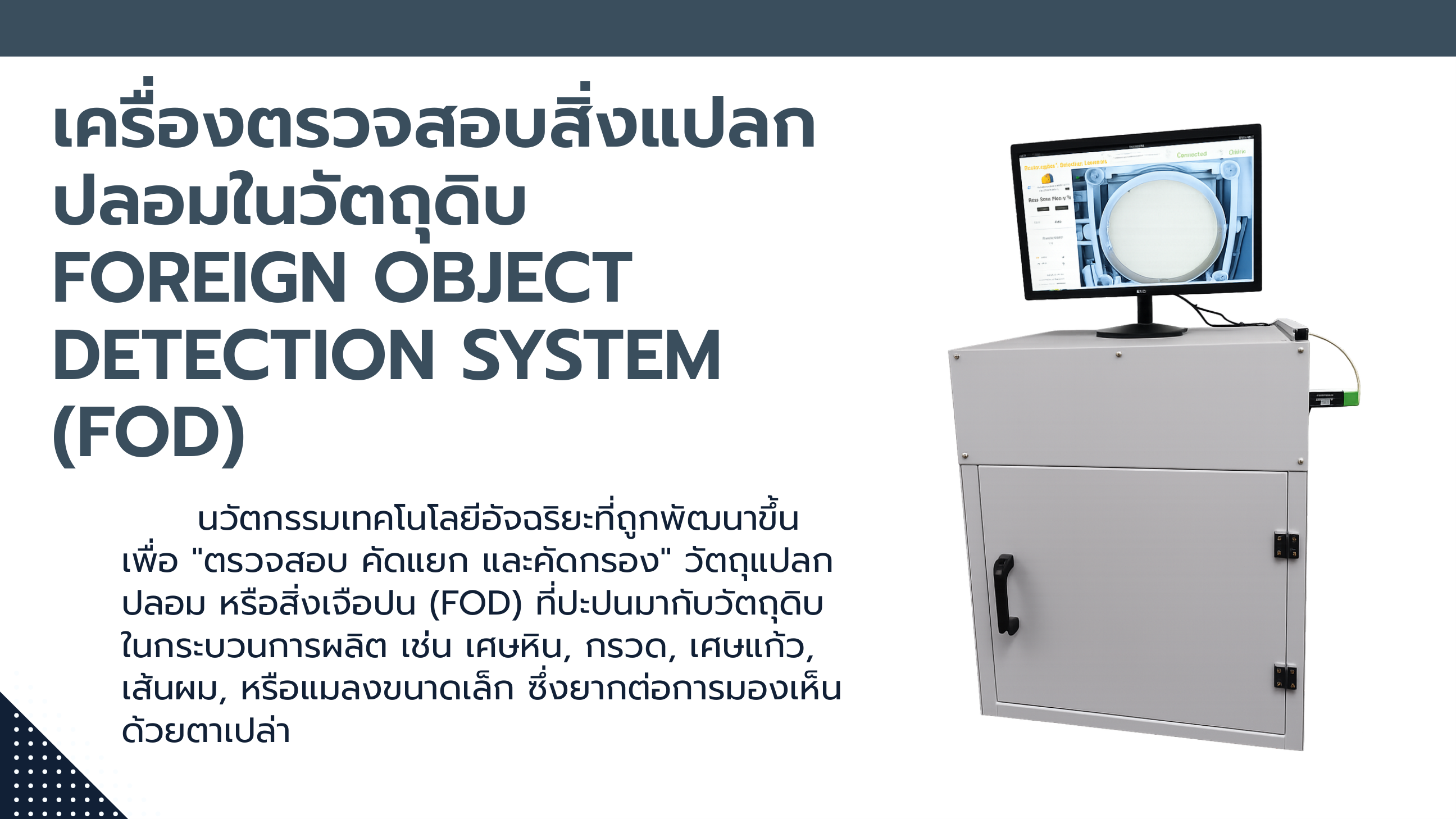
Foreign Object Detection System (FOD)
An OBRAS Project Reference for AI, computer vision and image-processing inspection supporting raw-material quality screening and traceable inspection records.
OBRAS service focus
AI, Software & Smart Factory Quality Inspection
This reference is relevant to the following OBRAS service areas. The list identifies solution categories for discussion; it does not add a separate client, deployment or outcome claim.
Operational challenge
What operational problem does this reference address?
The supplied project presentation identifies foreign objects in agricultural raw materials—including stones, gravel, glass fragments, hair and small insects—as a quality risk that can be difficult to identify consistently through manual visual inspection alone. Throughput pressure, fatigue and changing material conditions can also make a screening process harder to audit.
Solution scope
What OBRAS service is represented here?
This Project Reference describes an AI, computer-vision and image-processing inspection workflow. High-resolution imaging and a screen-based operating flow are used to support inspection of raw material and the recording of inspection outcomes for later review, analysis and traceability.
What the supplied reference describes
The supplied presentation describes an operator-led sequence: select an inspection task, load material, initiate a read cycle and review a result. It also describes server-stored inspection outcomes as part of a traceable quality-information workflow.
Planning perspective
Planning a quality-inspection workflow
A similar quality-inspection discussion should begin with the material flow, inspection points, product variation, environmental conditions and the action that follows an exception. It is important to identify which observations require immediate intervention, which records require review and what an operator needs to see in order to make a confident judgment.
The technical conversation can then examine imaging position, lighting, line speed, sample conditions, interface requirements, data storage and the role of a human reviewer. Rather than assuming that a model can resolve every condition, the scope should define what is detected, how uncertain results are handled and how the team records a decision.
For handover, the operating plan should name the owner of calibration, exception review, data access, training and maintenance. A documented process helps a site assess whether the reference pattern is appropriate for its own quality objective without turning this reference into a claim about another customer or facility.
- Clarify the operating decision before selecting devices or platforms.
- Map data, network, people and support dependencies together.
- Define a limited first phase and a clear handover path.
- Use a project-specific consultation to assess fit, feasibility and scope.
Discuss a similar requirement
Need to explore this service for your site?
Tell OBRAS about the site, current workflow, system constraints and the outcome your team needs to plan for.